
Rusutsu Guide
Rusutsu vs Niseko: Why the Skiing Experience Feels So Different
Two Hokkaido ski destinations, two different days on the mountain. Here’s what to consider when you’re deciding where to stay and ski.
Key takeaway
Rusutsu and Niseko are both major Hokkaido powder destinations, but the skiing feels different for structural reasons.
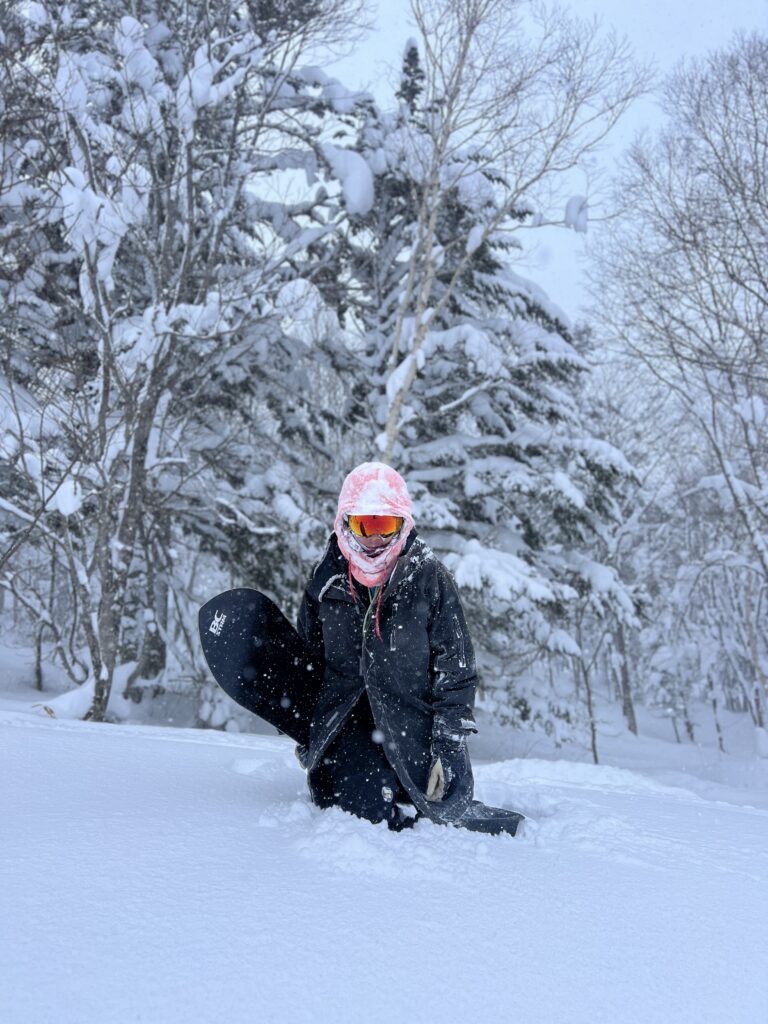
- Rusutsu is one integrated resort, with extensive lift-served ungroomed and tree terrain that can often be entered from many points along the piste network.
- Niseko United connects four separately operated resort areas, and some of its best-known beyond-boundary terrain is accessed through designated gates.
Those differences affect how skiers spread around the mountain, how crowded the pistes can feel, and what happens when weather interrupts upper-mountain connections.
The Lobs team has skied Rusutsu extensively since the 2020 season and operates locally around the resort throughout winter. The comparison below combines that experience with current resort information.
In this article10 sections
Start with the way the mountains are organised
Rusutsu is run as one integrated resort.
West Mt., East Mt. and Mt. Isola sit within the same operation under Kamori Kanko. The resort currently lists 37 courses across the three mountains.
Niseko United works differently. It connects four ski areas on Mt. Annupuri:
- Grand Hirafu
- Hanazono
- Niseko Village
- Annupuri
An All Mountain pass allows skiers to use the interconnected network, but these are not four bases run by one operating company.
Annupuri, Hanazono, Grand Hirafu and Niseko Village each have different resort operators.
On a normal day, many guests will never think about the corporate structure. You buy a pass, ride the lifts and ski.
It becomes more relevant when weather changes, upper lifts close, or you need to move from one side of the mountain to another.
The same base-by-base structure is visible in Niseko’s ski-school ecosystem. Separate schools operate around the different resort areas, with Grand Hirafu alone supporting more than one major school operation.
That does not mean ski schools cause crowding. It simply shows that Niseko traffic is organised around several different bases, rather than one central resort operation.
At Rusutsu, the piste map only tells part of the story
If you only count groomed runs, you miss quite a lot of what makes Rusutsu interesting.
The official trail network contains a substantial amount of ungroomed terrain. Heavenly Spirit, for example, is officially listed as ungroomed.
Rusutsu’s own course information also describes powder and tree skiing around areas such as Heavenly and Super East. Around Heavenly Ridge-A, powder skiers can choose lines away from the centre of the piste, while Super East has tree terrain on both sides of the run.
That is much closer to how experienced skiers actually use Rusutsu.
You come off a lift, follow a piste for a while, see an open entry into the trees and choose a line. Further down, you reconnect with the lift-served network.
On the next run, you may enter somewhere else.
For us, that is one of Rusutsu’s biggest attractions.
Off-piste does not mean backcountry
This distinction matters.
A run does not become backcountry simply because it has not been groomed.
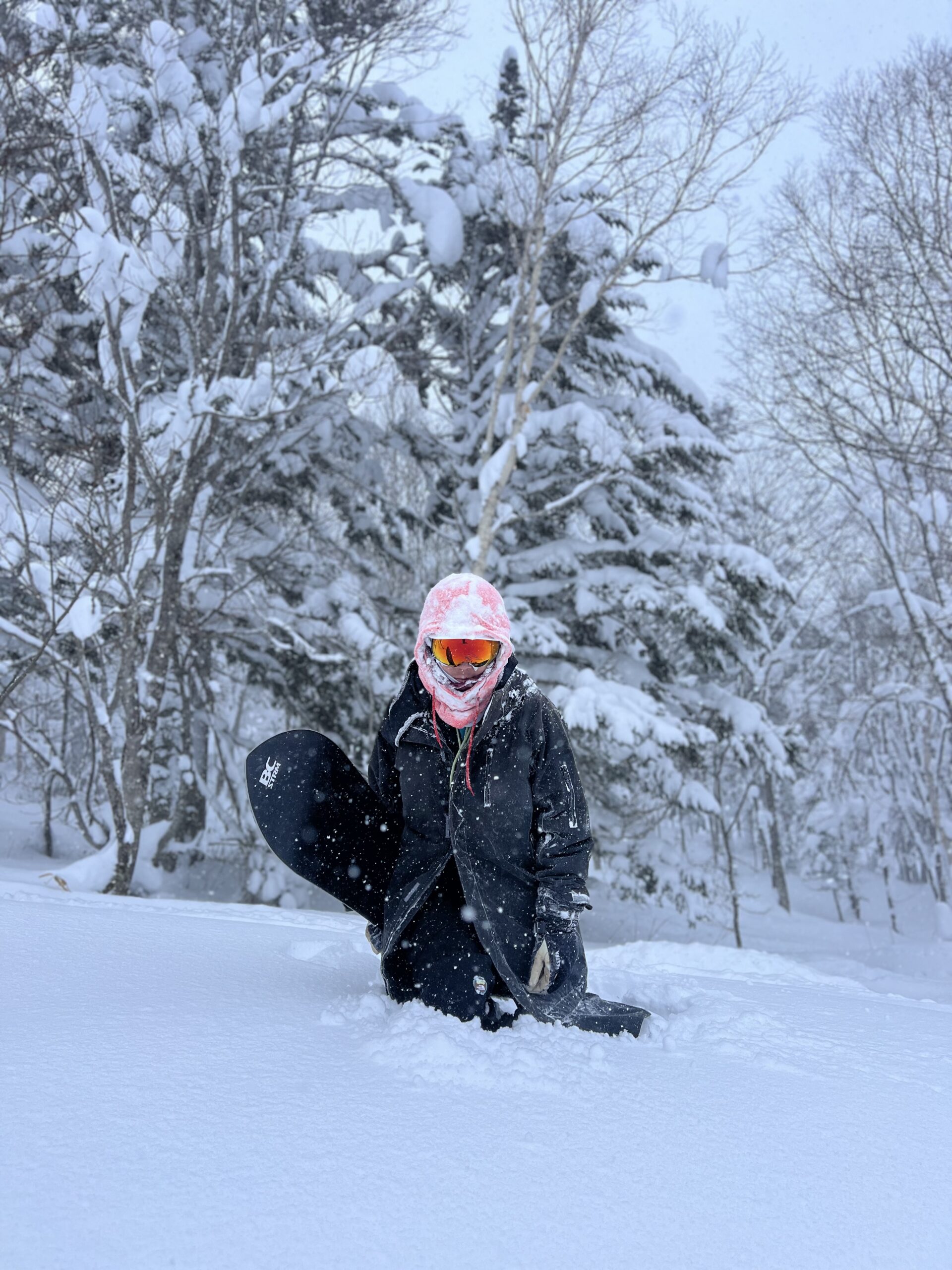
At Rusutsu, much of the tree skiing we are discussing sits around and between the normal lift-served piste network. In the areas we commonly ski, riders do not need to pass through a numbered gate every time they leave the groomed line.
These are not situations where we are talking about ducking a resort-boundary rope either.
You might leave a piste through an open section of trees, ski a glade and emerge onto another part of the resort network.
There may be several places to enter the same general area.
Many entry points. Many possible lines.
On a powder day, that changes how the mountain feels.
Niseko’s gates are designed for something different
Niseko’s gate system has a different purpose.
The Niseko Rules require riders entering backcountry areas to use designated gates. Boundary ropes are not to be ducked, and beyond-boundary access can be closed when the gates are shut.
That system is an important part of Niseko’s identity. Some of the terrain that helped make Niseko internationally famous lies beyond the resort boundary and is accessed using lifts and designated gates.
Both destinations have powder. Both have trees.
The difference is how some of that terrain is reached.
For the kind of lift-served tree skiing we do at Rusutsu, access is distributed across many parts of the piste network.
At Niseko, some of its most famous beyond-boundary terrain is channelled through specific access points.
On snow, those systems feel very different.
Why Rusutsu can feel less crowded
It is tempting to explain crowding purely by visitor numbers.
We do not think that tells the whole story.
What we notice most at Rusutsu is not simply the lift queue. It is the amount of space once you start skiing.
Experienced riders do not all remain on the groomers. Many disappear into the trees. Others head towards different ungroomed areas around Heavenly, East Mountain or Isola.
The mountain spreads people out.
Imagine 100 skiers at the top of a mountain.
If they have only a few practical routes down, they will see a lot of one another.
Give the same 100 skiers many more choices and the mountain begins to feel very different, even though the number of people has not changed.
We do not have comparative skier-density statistics that prove Rusutsu has fewer people on every day.
What we can say from extensive local experience by our guests staying in Kimobetsu is that the terrain gives stronger skiers many ways to disperse.
You notice it most on the pistes, where there can be a surprising amount of open space, and in the trees, where it is often possible to keep finding different lines after the obvious ones have already been skied.
What happens when Niseko’s upper mountain stops connecting
When Niseko United is fully connected, it can feel enormous.
Official Niseko information explains that skiers can normally move between the four resort areas using the upper lifts. Bad weather can interrupt those connections, after which ground transport may be needed between bases.
This is where Niseko’s four-resort structure becomes more noticeable.
A skier who starts in Hirafu may spend the morning moving across the mountain. If wind later closes the upper connection, the trail map itself has not changed, but the practical skiing available to that person has.
Cross-mountain movement becomes more limited.
More skiers remain within the terrain accessible from their current base, and advanced, intermediate and beginner traffic can become more concentrated around the remaining lift network.
It would be inaccurate to say that one upper-lift closure removes 75% of Niseko, or that everyone suddenly ends up on the same piste.
The number of practical choices can drop quickly.
When that happens, the mountain can feel significantly busier than it did earlier in the day. Rusutsu can also have wind holds and lift closures. Weather affects every Hokkaido ski resort. The structural difference is that Rusutsu starts as one integrated resort rather than four resort areas connected through the upper mountain.
Niseko has advantages Rusutsu does not try to copy
A fair comparison also needs to acknowledge where Niseko is stronger.
Grand Hirafu has a much larger village environment, with extensive accommodation, restaurants and nightlife.
Hanazono has modern resort facilities and high-end accommodation. Niseko Village combines resort hotels, dining and onsen, while Annupuri has a more relaxed base-area atmosphere.
For a mixed group, that can be a major advantage.
If some people want to ski while others want restaurants, shopping, bars or a larger international resort scene, Niseko has far more choice.
Rusutsu is a different proposition.
For many of our guests, the mountain is the main event.
They want to ski in the morning, find powder, spend time in the trees, ski with their children and come home tired.
For that type of trip, Rusutsu’s simplicity is part of the appeal.
Rusutsu or Niseko: which type of trip are you planning?
There is no useful universal winner.
The better choice depends on what you want the holiday to revolve around.
| If this matters most to you | Start by looking at |
|---|---|
| Lift-served tree skiing and ungroomed terrain | Rusutsu |
| Many possible entry points into glades | Rusutsu |
| Famous designated-gate backcountry access | Niseko |
| A ski-focused family holiday | Rusutsu |
| Restaurants, nightlife and après-ski | Niseko |
| A large international resort-village scene | Niseko |
| A simpler single-resort structure | Rusutsu |
| Exploring several distinct resort bases | Niseko |
| A mixed group with substantial non-ski interests | Niseko |
If we had to reduce the comparison to one practical idea:
Rusutsu tends to let the skiing spread out. Niseko gives you a much larger resort ecosystem around the skiing.
Those are different strengths. Choose according to the holiday you actually want.
FAQ
Does Rusutsu have gates like Niseko?
Not for the lift-served tree and ungroomed terrain described here. In the areas we commonly ski at Rusutsu, riders can enter the trees from many open points along the piste network rather than using a Niseko-style numbered gate system.
Is off-piste skiing at Rusutsu backcountry skiing?
Not automatically. Ungroomed or between-piste terrain can still be part of the lift-served resort environment. Backcountry generally refers to terrain beyond the ski-area boundary.
Why does Rusutsu often feel less crowded?
From our experience, skier distribution is a major factor. Stronger skiers spread into a wide range of tree and ungroomed lines instead of remaining on the main pistes. We treat this as a local observation rather than a claim based on visitor-density statistics.
How do the Niseko gates work?
The Niseko Rules require riders entering backcountry areas to use designated gates. Boundary ropes should not be ducked, and beyond-boundary access can be closed when gates are shut.
Can you ski between all four Niseko United resort areas?
When the upper mountain is operating, the four areas can be connected by skiing and lifts. Bad weather can sometimes close those upper connections, after which ground transport may be needed.
Is Rusutsu or Niseko better for families?
It depends on the family. Rusutsu suits families who want a relatively simple, ski-focused holiday. Niseko may suit mixed groups better if restaurants, nightlife and wider non-ski options are important.
Which is better for powder and tree skiing?
They offer different styles. Rusutsu stands out for the way lift-served tree and ungroomed terrain is woven into the normal resort skiing experience. Niseko combines extensive resort terrain with famous beyond-boundary areas accessed through its designated gate system.
Planning a Rusutsu ski trip?
The Lobs is based near Rusutsu and can help coordinate accommodation, resort transport, private ski or snowboard lessons and other parts of a Rusutsu ski holiday.
If you are deciding whether Rusutsu suits your group, feel free to ask us about the mountain first. Booking can come afterwards.

© 2026 The Lobs. All rights reserved.
Original text, photography, maps, graphics and research may not be reproduced, republished or commercially reused without written permission.